InstinctiveHealthParenting4U

Change your Attitude, Heal your Soul, Balance your Life. Uplevel YOUR consciousness. Find your way HOME through MAAPS.


Leave a comment

Pushing Yang over Yin energy for power: the focus of feminism in the millennium, part 1

The feminist movement in the millennium and the masculinization of femininity. This is Part 1 in a series of 3.

In my early education I was taught to question accepted belief systems, as a  way of clarifying the underlying paradigms and developing mindfulness.  As the years have passed since my your, our world has changed.  I notice that there is still a lot of questioning of traditional beliefs but I have noticed that alternative beliefs or beliefs identified as progressive are not as questioned among my peers.  Perhaps it’s because it feels like it’s proven to my peers; additionally, there is this energy that finally these non-traditional ideas are now taking hold, so there is no need to question them…but I think it’s a good thing to evaluate what you believe from the inside out, and see if what is being created is actually a better situation or needs more fine-tuning.

I often find I am standing in the center of a controversial subject, which is to say that I see points of view from both sides; I experience my conclusion to these controversies is not fully in alignment to either side…so I find myself alone, a lot, outside of either group….

Just because something is popular, doesn’t make it right…and sometimes the thing that is right: sound and just, isn’t popular.

Belief systems are set in the center of the social milieu…what sociologists call location in time.  As an example, in the fifties in America drinking alcohol and smoking cigarettes while pregnant was completely acceptable…today there are prohibitions not only legally and socially but also medically for doing such, because it has been determined that alcohol and cigarettes have deleterious effects on the developing baby in a woman’s womb.

So the idea of feminism has been applied to various social issues.  My concept of feminism seems to be different from how the word is interpreted by various groups.  From my perspective the idea of feminism is inclusive of elevating the opportunities and rights of women…not exchanging rights or limiting rights, or diminishing women who choose more traditional roles.  Feminists should on the face of their actions support women, all women.  They should actually stand up for each other and not create a divisive set of good women and bad women groups. Feminism should entail a broad set of beliefs that are inclusive of the roles women choose, should provide support to women figures that have attained a positive power role in society and should focus on increasing opportunity for women.  At the least feminism should not be a way to deride women who are participating in traditional roles or who have chosen to be conservative versus liberal…this action alone is hypocritical and deflates the positive aspects of the feminist social movement.

Recently there have been three situations in the news where women have been forced to step down from speaking at universities due almost exclusively to their political affiliations:  most recently, Christine LaGarde, previously Condoleza Rice, and just previous to that Ayaan Hirsi Ali.Wall street journal, may 12, 2014, ..closed minded universities.. previously Condoleza Rice, and just previous to that Ayaan Hirsi Ali, latimes, april 2014, …an example of a university not choosing to stand for freedom of expression, critical thinking…

These individuals have each overcome tremendous adversity and attained a position of influence and clarity in their specific fields.  And yet, rather than being supported or defended by the feminist movement leaders, their treatment is either ignored or the feminist leaders are complicit in deriding the women.  I understand this is sociological group behavior, ostracize behavior seen unacceptable by the ruling group leaders…and it is not popular today to be conservative, it is not popular today to go against the current progressive belief systems and it is not popular today to be in any way affiliated with the finance community…but the fact that the feminist movement is choosing which roles are acceptable and which roles are not is simply another way to control women and limit their choices which is the opposite of the goal of feminism.  It is a real war on women, driven by women.

Feminism has unfortunately taken a bifurcated, and skewed course over its reign, since the late 1800s.  I perceive that indeed some actions supported and advocated under feminist ideas are actually limiting women’s rights and opportunities, while others are increasing women’s freedom and equality in the American society.

By analyzing the course of feminism with a neutral perspective, unencumbered by the propaganda of the feminist movement, I have come to a few vastly different conclusions than the current progressive belief systems taught in university.

I perceive Feminism of the sixties as a paradigm of increasing the opportunities for women to participate in sexual relationships without the threat of having to deal with pregnancy or child-rearing. This is directly related to the development of the birth control pill. Women wanted the freedom they observed in their gender counterparts…This is one of the main driving forces behind feminism and ‘civil rights’ of women and is the issue that is behind women’s rights in areas where women’s sexuality are severely controlled by the society in which they live.  This is a far more pressing issue in countries other than America… ie: where women are ritually circumcised to reduce the degree of sexual pleasure they experience in sex — this is to control women.  This aspect of feminism is akin to women’s voting rights of the suffragist movement.  Both of these aspects of feminism have greatly increased women’s rights as human being and their equality to their gender counterparts in society.  I perceive to be of great importance.

Another important issue of feminism is to recognize the importance of equal pay for equal work, this was first in play in the forties and then returned in the eighties and nineties when women began to identify the glass ceiling in corporate America. It was at this time that the power suit came into play. It brought with it a shift away from creating more choice for women and extending opportunity to choosing which kind of behavior was favored by the feminist movement.  This was the beginning of an accepted persecution of women whom they felt didn’t support this focus. This resulted in a fracturing of the feminist  movement.

Pushing Yang (active, competitive, masculine energy) over Yin (feminine energy, inner creation, collaboration), the movement attacked women directly for their personal free choice of how to work, marry, and participate in society.  Value was placed on ‘doing man’s work, in the corporate and political world.  Working at home, caring for children, and traditional roles were devalued.

Women are in general paid less than men how much less depends a little of whether you are comparing apples to oranges. The amount less for similar work is now around 5% less – so an amazing good score for the efforts of feminists in this arena. But at what cost has this been achieved?  The means of achieving it has created other unintended consequences (see more in part 2, and part 3 of this series).

Society and location in time have a lot to do with the original pay discrepancy and how things have changed today.  A change started in the forties, the fifties created a lull in that change, but as part of the sixties movement  this began to change. The nineties addressed this through a changing focus on gender roles. It has been shifting to a more equal compensation in the last ten years.

In the fifties, a man worked to support a family (children and a wife) and women worked to support one.  This was partly due to the culture of the fifties that women worked in the home and men worked outside the home.  So the employer tended to pay accordingly.  As women became more highly educated and interested in working outside the home the shift in the marketplace  represented that societal shift.

Several issues plagued the movement toward equal pay:  specifically biological limits of childbearing (women are limited in the range for safely getting pregnant while men can conceive over twice the number of years), childrearing (although daycare and equality for men to stay at home and raise the children came into action in the nineties, for the most part this role fell to women).

So men stayed in the workforce and at that company while women left to have children, get married, and tended to leave to follow their partners. Additionally, from a sociological perspective men were mentored to move into the areas of business which were on the fast track to moving up the corporate ladder, marketing, sales while women were mentored into human service which dead ended at middle management or areas away from the ladder; this appears to have a connection to the issues of having the freedom to child bear and child rear and still be in the workplace.

Okay so fast forward to now: due to the no contest divorce effects, (IHM march 13, 2014 blog) and other factors, more women are having to support children without the help of men and so that fifties concept no longer applies.

Additionally, women no longer wait to have babies in a committed/married/partnered relationship. There a number of circumstances where women are not supported by the other parent  indeed sometimes the other contributor is the federal or state government through Medicaid and other funding, including women who choose to parent via IVF as single parents.

So equal pay is a more appropriate response to the societal change and is  a good place for feminism to focus on when supporting the rights of women.

When you do a statistical analysis that really takes into account these issues, time in the workforce, and job choice, the difference between genders is less than 5% for pay for similar jobs, according to new studies out this year.

In this arena feminism has done a great job to move forward the importance of equalizing the attitude toward women in the workforce and their value there.  

But I propose the course of doing this by the feminist movement resulted in the masculinization of femininity which has had an unintended consequence of creating a harmful imbalance in society resulting in separating ‘good feminist women’ from ‘bad feminist women’ based on the roles they chose to play in society AND creating a serious breakdown of the psychosocial development of generations of children.  To see how read part 2, and part 3 of this series. offered in love and light bg 


Leave a comment

ego…no ego: balancing inner desires with outer expectations

The fastest way to align with the best parts of yourself and perceive the oneness of all humankind is through the ego.

star of david reflection

The ego is the mindful aspect of your self. In fact, if you want to get to no-ego you want to fully embrace ego, and then you will observe no-ego within you as you elevate your consciousness to oneness with all. (Gineris, turning me to we:the art of partnering with mindfulness, 2013)

This is not unlike the very power of breath in yoga to dissolve the blocks of energy within your muscles. Embracing the blockage, and breathing with and through it transforms the energy.

The concept of ego in psychological theory is the role of mediator and rebalancer in the tripartite aspect of the human mind developed by Freud.

The ego’s job is to mediate between the primitive needs and wants, the id, of an individual and the introjected societal shoulds and should nots inculcated from your parents, the superego. (Freud, the ego and the id, 1923)

The ego has gotten a bad rap from alternative healers indicating that it is power and control based. I suspect this has to do with the Buddhist concept of living free of inner desires. There is no need for a mediating aspect of mind if you are not in such an inner battle between self and society.

Another confusing piece of the puzzle is the term egoistic or egotistic, it references an inflated picture of self and selfish behavior. The root of these words is ego and so there is a tendency to attach selfish, power-hungry meaning to the word ego.

But this is the same mistake as calling someone who is hypomanic depressed. it is understanding the meaning of the prefix hypo, less or under, without understanding the meaning of the word. When an individual is hypomanic she is agitated frustrated, aggressive, but not in a full-blown manic state… so just under (hypo) mania. She is still hyper-aware and hyper-agitated.

Your ego is not selfish but rather holistic, attempting to discern ways to guide your actions and thinking toward caring for individual needs while living under the expectations of society.

The problem with an interpretation of ego as power-hungry is that it pulls you away from the part within you that is actually guiding you toward spirit.

Ego is that aspect of yourself that invites compassion, neutrality, lovingkindness, and the concept that we are all one to come into your mind.

Shift your relationship to the word ego by clarifying the underlying meaning.

  • Avoid acting in a selfish manner.
  • Use mindfulness, compassion, and lovingkindness in your decision-making.
  • Breathe
  • Embrace the perfection of spirit already within you, guiding you toward the most holistic and loving action that allows for the oneness of the universe to be represented.

finding your wayEgo/no-ego, rebalance your internal picture so that you can increase your empathy and connect to the spirit within you that is connected to all. Then your needs and society needs (or group, or couple needs) clarify, become aligned, and your actions are empathetic, bounded, and resonant from an inner security.in love and light, bg

dr beth gineris is an integrative medicine practitioner in albuquerque, new mexico. she offers compassionate, mindful guidance to online coaching clients and clinic patients daily using her medical intuitive, clinical counseling, energetic rebalancing, and oriental medicine skills. you can find her at http://www.bethgineris.com

Das, Lama Surya. Buddha Is as Buddha Does: The Ten Original Practices for Enlightened Living. HarperCollins, 2007.
Freud, Sigmund. The Ego and The Id. w.w. Norton & co.,1923.
Gineris, Beth. Turning Me to WE: The Art of Partnering with Mindfulness. Createspace, 2013, p186-190.


3 Comments

Healing sound

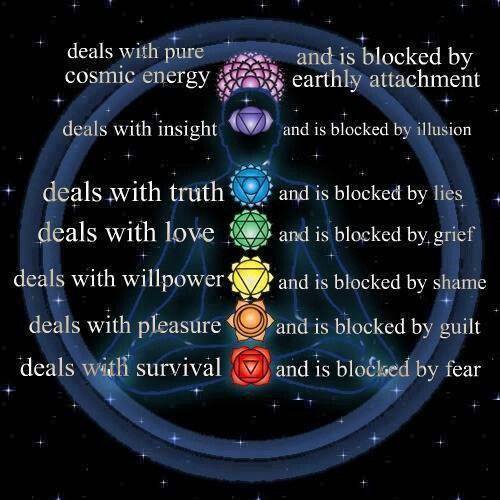
I have been using crystal toning bowls in my practice recently, to shift negative energies out of the various chakras and to accelerate the opening of new chakra centers.

There are specific sounds for each chakra:

chakranoteswebc,d,e,f,g,a,b are the notes for the seven chakras typically identified.  The toning bowls that sound at each of these notes can assist in healing these specific chakras.

In addition, my teacher dr. Jeffrey Meyer taught me that chanting the vowels: eh, ee, ah, O, oo in a repeated fashion with one breath can align the various chakras through aligning the five elements in your visceral and etheric system.

The sound is like this:  

When you are feeling out of balance you can use this technique to center yourself and align your physical and spiritual self.  You may notice certain sounds are easier, stronger, or more difficult this gives you an idea of where you may be out of balance.  As you develop an understanding of the connection between the sounds and the elements, you may utilize this connection and sound to heal yourself.

Even without this level of awareness you can feel yourself strengthening and balancing by repeating the sequence with your breath until you feel the shift and rebalancing.  Listen again to the above link, you may notice the difference in strength and alignment from the first to the third toning in the above audio link.

There are crystal bowls for c#, d#, f#, g# and b#.

chakrasnotesastrologyThere is evidence that new  energy centers are developing within our chakra system that correspond with these sharp notes.  These can assist you in developing your capacity for breath, the diaphragm chakra (d#) or  in opening the thymus or higher heart chakra (f#) which can assist with increased immunity, as well as the Zeal point or Mouth of God chakra at the base of the occiput,( g#), which assists with compassion and telepathy, a deeper connection with spirit and the universe.  I have not investigated the evidence about the relationships between these centers and astrology, but this figure offers a sense of the new chakra configuration and sounds.  I have been using the e, f#, and g# in my practice and find these sounds to be profoundly healing.

Here is a link to all the newly developing chakras and sounds, crystal singing bowls.

chakra mantrasAs you are developing your understanding of these bowls, chakras and sounds, you may also want to address blockages in your thinking or beliefs.

Work with the first set of chakras first, root, sacral, and solar plexus as these will help to keep you grounded as you move into higher energetic realms.  You can use color to amplify the strength of these chakras.  Meditation on the chakra will enhance your clarity about what you need and how well balanced you are.

You may want to work with these blockages by simply using cognitive inversions, reframing the difficulties into gifts and aligning with the power of gratitude, compassion, and forgiveness.

Acupuncture, energy work, therapy, journaling, and breathwork are all helpful in realigning with your true power and integrated self.

Yoga is an excellent source of support, to help you balance your integrated spirit, mind, body fields as you are increasing the amount of light you are pulling into your energetic system.  It helps to lengthen your spine so that you can actually hold more light.

Sound is a powerful healer.

Consider the effect certain songs have on you. The effect of a song is not only related to your psychological connection to it in the development of your life, but also to the tone and harmony of it, and how it relates to your internal energetic systems.  Classical music and the Beatles have the ability to create a sense of balance, this is directly related to the healing power of sound.

This is the meditative and balancing power of chanting and toning.

Have fun with this.

Discover what sounds are healing to you.  These may change over time and as a result of various circumstances.

Recognize that you have the power to heal within in you simply through toning and sound.  Embrace the power to heal within yourself and clear the path to a new level of consciousness in thought and action. in love and light, bg

photo(22)For a medical intuitive session, chakra balancing, or sound healing session please contact me at my website, dr beth gineris, at www.bethgineris.com, classes & healing sessions


1 Comment

sleep like a dog for a long life

Hello and Welcome!

This post offers excellent support to increase your healthy balanced living.

Li Ching-Yuen was purported to have lived 256 years in China dying in 1933.  When asked the secret to his long life he related his knowledge for longevity in this simple sentence: “Retain a calm heart, sit like a turtle, walk like a pigeon, and sleep like a dog.”

retain a calm heart may also be translated to maintain a tranquil mind… this is a direct reference to meditation.  Over the years many studies have shown the deep and abiding benefits of meditation; showing that focused mindful meditation helps with maintaining healthy brain function and cardiovascular function.  Meditation increases resilience to stress.

...sit like a turtle is a reference to stillness, being still, allowing stillness without distraction and without multitasking…this allows for the fullness of each experience and allows for rejuvenation…there is significant evidence that the amount of stimuli requiring attention or the amount of multitasking required by americans leads to stress and allostatic overload.  Creating stillness increases space for rejuvenation and a return to balance.

walk like a pigeon, also translated as walking quickly or sprightly, this referenced moving rhythmically and frequently.  This seems to keep the body, heart and mind activated and attentive without a sense of hyperactivity.  Activity with rest is the most balanced style of physical development and health.

sleep like a dog…this is indeed my favorite as it references the importance of not aspen and romeo asleep 3-12holding onto anything that causes anxiety, releasing unforgiveness, allowing past to be past and being in the now…conserving energy and embracing the importance of deep and fulfilling sleep…healthy in-balanced dogs take frequent naps when there is a lull in activity and then awake refreshed ready to pounce on the day or evening.

When you focus on living in a healthful, balanced fashion you increase your lifespan and decrease the negative effects of aging.  Living out of balance shortens your lifespan.

In a time when there is debate about health insurance and the issue of accessibility it is important to see through the propaganda to truth.Health insurance doesn’t precisely increase accessibility.  Healthcare is not health insurance.  In order to increase accessibility, many shifts are required.

You can sidestep this problem, if you are currently healthy or moderately out of balance, by increasing your balanced practice in living.

Consider the issues of spirit, body, and mind.  (You may also read this series of articles on shifting your attitude, connecting to your spirit, and balancing your life, to develop your 4×4 Habits to Health.)

How are you increasing your risk for imbalance and need for health care?  Ask yourself these questions.

  • Do you have difficulty sleeping?  Do you awaken after a full nights sleep and feel unrested?
  • Do you feel sluggish?  Do you have an ongoing sense of fatigue?
  • Do you have trouble exercising either due to a lack of energy or pain?
  • Do you have chronic pain?
  • Do you have a pervasive sense of uneasiness or anxiety?
  • Do you feel overwhelmed with your tasks and responsibilities?
  • Do you feel you overeat, or drink alcohol, or use drugs to deal with your stress level?
  • Do you feel isolated?  Or do you feel too much responsibility for those for whom you care?
  • Do you eat food you know is not good for you because you are too busy to make good food? Or do you eat food that is not good for you because you have to eat quickly and on schedule?
  • Are you overweight and find you cannot seem to drop the weight even when you try?
  • Do you have unresolved anger or unforgiveness regarding earlier injuries, losses, or relationship issues?
  • Do you feel bereft spiritually?
  • Do you feel apathetic?
  • Do you feel angry, and short-tempered more than 30 % of your waking time?

If you get more than half answers in the positive, your life is out of balance.  This kind of imbalance can lead to heart disease, increased bad cholesterol, increased levels of glucose, increased levels of cortisol, decreased energy, difficulties with sleep and the overall regenerative processes built into your integrated spirit, mind and body processes, and a more rapid aging process.  To make the necessary shifts in your habits of living, begin with the above mantra.  You can start today!

Up to now, the western medical program in the US has been to enable Americans to behave in an unbalanced way and then get treatment for their bad behavior, calling this health care treatment.  Now that we are moving into a socialized medicine program, this will begin to diminish.  less and less will unbalanced, unhealthy behavior be supported through medical treatment.  This is because the cost to do so is very high.

As you look over the last 120 years there is an interesting observation of overindulgence, then abstinence with the pendulum swinging toward each end in succession.   Letting go and partying then pulling in and recuperating.  The ground for this warfare being your body.  When lifespans were closer to fifty years rather than one hundred years, this overindulgence only shortened a person’s life slightly.  Now, individuals who want to live longer will have to live healthier more balanced lifestyles to have their bodies be working efficiently at the end of their lives.

“Retain a calm heart, sit like a turtle, walk like a pigeon, and sleep like a dog.”  OR

Change your attitude, Heal your spirit, Balance your life… if you want to find a deeper practice or just want support in finding your way to balance, you can contact me at my website for more intensive coaching or other great resource material, www.bethgineris.comin love and light, bg

photo of two dogs sleeping:  Lisa Aldon

front cover.me2we

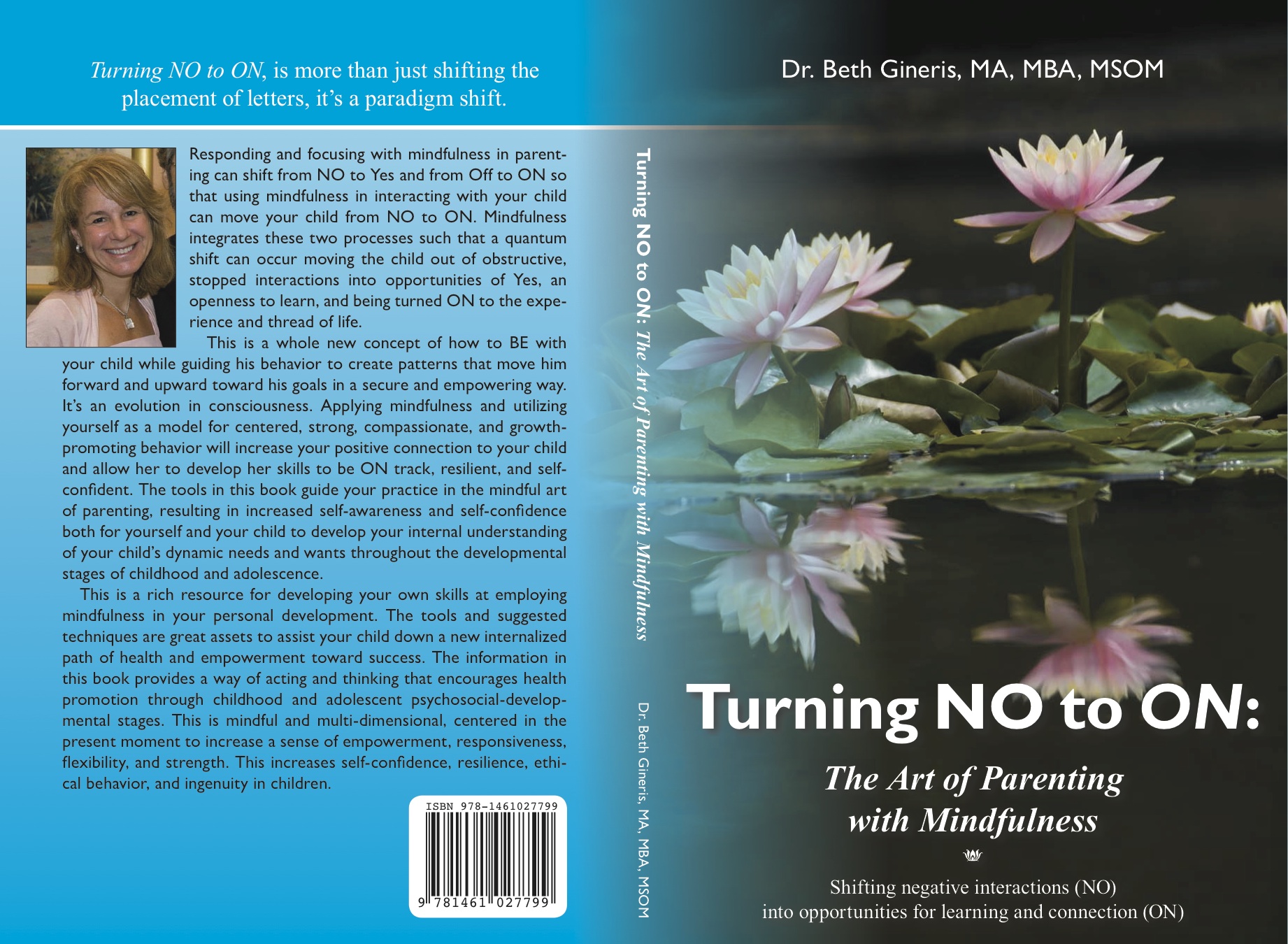
Gineris, Beth. Turning NO to ON:  The Art of Parenting with Mindfulness, 2011; Turning ME to WE:  The Art of Partnering with Mindfulness, 2013.


Leave a comment

II: Heal your Soul, Move Spirit from facilitator to Leader

Hello and Welcome!  

This is second in a series of articles. II:  Heal your Soul, Move Spirit from facilitator to Leader.

I. Change your Attitude, II:  Heal your Soul, III:  Balance your Life

II:  Heal yout Soul, Move SPIRIT from facilitator to leader and your direct point of focus toward meditation, Breath, prayer, and a search for unity

Meditation, Prayer, Breath daily or twice daily to redirect and refocus your energy, attention, and intention.

Spirt focus, clarity, and connection as a primary focus connects spirit, mind, and body, so that you create what you desire rather than avoiding what you fear.  It increases access to your balanced, core-self and increases your ability for critical thinking, flexibility, and quick responsiveness.

merkabah portalBelly breathing alone can reset your cells, mood, emotion, realign and center you.

Brain scans on long-term meditators show that regions associated with attention, self-awareness and sensory processing are thicker in meditators, and that this can offset age-related cortical thinning: this is strong “evidence for … cortical plasticity” (Lazar SW, Kerr CE, Wasserman RH, et al. Neuroreport. 2005;16(17):1893-1897).

Thinking about what happens with stress, meditation and breathwork diminishes and eradicates the negative effects of stress.  When Mind is in control the power to reduce stress is limited; when your leader is Spirit the opportunity to engage in mindful meditation allows for powerful healing effects.Albuquerque skies

“The regular practice of meditation may have neuroprotective effects and reduce the cognitive decline associated with normal aging.” (Pagnoni G. Cekic M. Neurobiology of Aging. 2007;28(10):1623-7).

Evidence found as a result of mindful meditation:

  • –>>Increase in cortical thickness in areas assoc. w/ attention, interoception, & sensory processing such as prefrontal cortex and right anterior insula;
  • using this network to attune to internal senses via the social neural circuits involved in interpersonal attunement, including the middle prefrontal regions, insula, superior temporal complex, and the mirror neuron system->> all from mindful meditation practice.
  • AND, more positive Amygdala responses include:  positive affect regulation by optimizing prefrontal cortex regulation of the amygdala including Left sided anterior activation,
  • this allows development of a tendency toward positive emotional responses & approach /reward oriented behavior,
  • (which aids in decreasing symptoms of depression and anxiety)(Applied Mindfulness Current Psychiatry Vol8.no12p40 2010).

Consider the power of the serenity prayer:  release what you cannot control, shift what you can control, discern the difference.

Any of these 7 activities can increase your spiritual meditative connection:  lao tzu

  1. Soothing/meditative music; singing
  2. Meditative walking, running; hiking,
  3. dancing; Tai Qi, Qi Gong
  4. yoga practice;
  5. Prayer; focused breathing, meditation
  6. Gardening, meditative focus while performing repetitive motion chores,
  7. Any activity that brings mind/thinking to neutral and offers a spiritual connection with whatever feels spiritual to you

Next read III: Balance your Life, Nourish your body and connect to your community.

See how you can institute these shifts today, and read the following article.  i: Change your Attitude, II: Heal your soul, III:Balance your life.  Enjoy, enlighten, and inspire your self, and your life in every aspect of it,  Namaste., () in love and light, bg

beth's book No to ONGineris, Beth. Turning NO to ON:  The Art of Parenting with Mindfulness, 2011; Turning ME to WE:  The Art of Partnering with Mindfulness, 2013.  www.bethgineris.com 


Leave a comment

focusing on mindful living leads to spirit, mind, body health

Hello and welcome:

I was asked last weekend to give a lecture at the ABWA, American Business Women’s Association, New Mexico Fiesta on Turning the Triple Play – Keeping Life in Balance.  Here are some of the important tidbits I shared with the 40 or so attendees.

If you want to be successful in the three arenas of your life, self, family, and business or work, then you will want to follow develop these 4 Habits:

Habit 1: SPIRIT meditation, Breath, prayer

Meditation, Prayer, Breath daily or twice daily to redirect and refocus your energy, attention, and intention.

This connects spirit, mind, and body, increases access to your balanced core self and increases your ability for critical thinking, flexibility, and quick responsiveness.

Belly breathing alone can reset your cells, mood, emotion, realign and center you.

Brain scans on long-term meditators show that regions associated with attention, self-awareness and sensory processing are thicker in meditators, and that this can offset age-related cortical thinning: “evidence for … cortical plasticity” (Lazar SW, Kerr CE, Wasserman RH, et al. Neuroreport. 2005;16(17):1893-1897).

“The regular practice of meditation may have neuroprotective effects and reduce the cognitive decline associated with normal aging.” (Pagnoni G. Cekic M. Neurobiology of Aging. 2007;28(10):1623-7).

Evidence found as a result of mindful meditation: Increase in cortical thickness in areas assoc. w/ attention, interoception, & sensory processing such as prefrontal cortex and right anterior insula, using this network to attune to internal senses via the social neural circuits involved in interpersonal attunement, including the middle prefrontal regions, insula, superior temporal complex, and the mirror neuron system – all from mindful meditation practice AND more positive Amygdala responses:  positive affect regulation by optimizing prefrontal cortex regulation of the amygdala. AND Left sided anterior activation: develop tendency toward positive emotional responses & approach /reward oriented behavior, (which aids in decreasing symptoms of depression and anxiety)(Applied Mindfulness Current Psychiatry Vol8.no12p40 2010).

Consider the power of the serenity prayer:  release what you cannot control, shift what you can control, discern the difference

Any of these activities can increase your spiritual meditative connection : Soothing/meditative music; Meditative walking,running;  hiking, dancing; yoga practice; Prayer; Gardening.  Any activity that brings mind/thinking to neutral and offers a spiritual connection with whatever feels spiritual to you

Habit 2: MIND release anger,reduce stress

Address anger and frustration early to extinguish them from your daily routine. Paradigm shift, Forgive, Be compassionate, Be Mindful

Understand Anger’s role: The Alarm aspect, your sensory guidance system: Alert, Respond, Clear

Step out of your Survivor scenarios and Habit reaction patterning – if you want more information about these and how to do that search this site with these phrases, I have written a lot about them – or you can read my two books on mindfulness in parenting and partnering see link below.

Befriend your Anger.  Discover what messages it is giving you, which boundary has been crossed and then see if you can reset your internal alarm system and let it go but releasing it and taking the required action.

Focus on the attitude of Gratitude.

Ways to reduce stress and release anger include: Inverting misbeliefs and focusing on what you want rather than what you fear.  Breathing through until you can reset yourself and be mindful.  Using mindful communication.  Practicing yoga. Journaling to investigate underlying issues or to dump worries.  Using a time-in or stop, look and listen method, thought stopping, and EFT.

Activate the power of gratitude and Forgiveness

Prolonged stress (and unresolved anger) leads to wear-and-tear on the body (allostatic load) Mediated through the Sympathetic Nervous System; Allostatic load leads to:  Impaired immunity, Accelerated atherosclerosis, Metabolic syndrome (hypertension, high cholesterol, type-2 diabetes, central obesity), Bone demineralization (osteoporosis), and Chronic stress can sensitize the brain for the later development of depression (McEwen BS. Ann N Y Acad Sci. 2004;1032:1-7).

Mindfulness practice increases:  Neural plasticity, Immune modulation, Anti-inflammatory, Enhancing immune function, positive Behavior/ lifestyle change, Improvements in sleep, Rumination reduction, and General wellbeing (Ivanovski B, Malhi G. Acta Neuropsychiatrica 2007;19:76-91).

Habit 3: BODY Eat, drink, sleep, exercise

Eat whole foods that are grown or cared for in a humane loving way, are primarily prepared by you or someone you love, and look like a rainbow to support your physical health.

Drink 3 liters of water a day, more if you exercise or live in a dry climate.  Water, not tea, or coke, or coffee etc…H2O positively helps with your cellular health. It positively affects your cognition, heart, electrical gastroenterological, kidney-urinary, and immune system – WOW, right?!

Water is profoundly necessary for your body systems and mind to work efficiently, http://www.ncbi.nlm.nih.gov/pmc/articles/PMC2908954/

Your hydration needs are affected by your exercise habits, the altitude at which you live, whether you are menstruating, and your personal system imbalances ( ie: slow digestion, toxicity, meds etc)

Exercise 1 hour a day for maximum health if you are not currently doing this, move up to it slowly to build your muscles and systems in a healthful way. Begin with 20 minutes every other day then move to 15 minutes daily, then 30 minutes every other day and them 20 minutes daily, until you make it to 60 minutes a day.  Choose an exercise regime that suits you, holds your interest, brings in fun.  Positive Benefits of Yoga -> reducing depressive symptoms, and inducing remission in mild to severe depression in depressive disorders – WOW! (Current Psychiatry Vol.8,No10,p39-47).

7 benefits of exercise:  1/ Controls weight, 2/combats health conditions/diseases heart, cholesterol, breath capacity, strength, cognition, 3/improves mood, 4/boosts energy, 5/promotes sleep, 6/increases interest and capacity for sex, 7/ fun – creativity, healthy competition, focus, endurance, social, widens interest. http://www.mayoclinic.com/health/exercise/HQ01676 .

Sleep 6-8 hours a day.  Sleep is the most powerful health promoter! It balances your brain, blood, spirit, reduces pain and inflammation.  Don’t ignore it!  Sleep is the great neutralizer and reformer.

Sleep plays an important role in learning and memory consolidation.

Sleep deprivation can result in memory loss and diminished fine motor and cognitive skills; can impede response time in crisis situations and increase psycho-emotional problems.  Lack of sleep can increase pain experience.

sleep 7-9 hours each night/get to sleep by 11pm.  School-age children need 9-10, Babies/Toddlers require 12-14 hours of sleep; Teenagers need 8-10 hours of sleep. For kids sleep debt can lead to an increase of restlessness, attentional, oppositionality issues

Sleep affects Cognition, learning, health, experience of pain & stress; it benefits your Spirit, Mind, and Body: http://www.mindfulparentingmag.com/2012/11/29/the-importance-of-sleep/

Habit 4: the power of community, rejuvenation, and networking

Connecting, collaborating, networking, and groups offer a special kind of balance.  Finding a space to belong, share struggles and get support increases your power in maintaining the balance in these four habits.

Studies show that women respond to stress with tend and befriend.  Connecting in ways that help with self growth and rejuvenation, work interests and social endeavors through focusing on learning or maintaining knowledge helps keep your mind healthy.

Focusing on groups that sustain your body like exercise groups or training or food.  And connecting with spiritual outlets will keep you centered and grounded.

See how you can institute these four habits today.  Enjoy, enlighten, and inspire your self, and your life in every aspect of it,  Namaste. in love and light, bg

Gineris, Beth. Turning NO to ON:  The Art of Parenting with Mindfulness, 2011; Turning ME to WE:  The Art of Partnering with Mindfulness, 2013.  www.bethgineris.com


Leave a comment

mindfulness and parenting revisited

Hello and Welcome

Negotiating the treacherous waters of parenting can be anxiety provoking and discouraging.

This results from both internal insecurity and external unpredictability.

Three steps will keep you in the flow and having fun as you reclaim the role of mama/papa/leader.

Step 1.  Strengthen your connection to your personal sensory guidance system.  This is the connection to the information freeway  from your five senses and your intuition.  This is information about your environment, your child, and others that assists you in making thoughtful decisions. Step 2. Trust your knowing of your child. Listen to him or her – listen with your ears, your heart, and your sensory guidance system. Step 3. Guide with strength and lovingkindness. Be self-confident and go with the flow. Be patient, kind, and firm.  Say I am sorry, and make efforts to shift your responses to best meet you child’s needs.  Model respect and trust by being respectful and trustworthy.  In all your disciplinary responses focus on learning and loving; be loving and sensitive to the multi-level issues involved, respond quickly and clearly, and use the opportunity to teach joy and strength in being a responsible person; an individual connected to a community.

To help you embrace the three steps, understanding the nature of the parenting is key.

  • Parenting is modeled.
  • This means that you learn how to parent from your interpretation of your own parenting.  This concept of learning social interactions through your group associations is a function of how the human brain develops over the first 24 years of life; and a part of what happens whenever you enter a new social group, environment.
  • What you see done is what you incorporate into doing to others and to yourself; as you age the internalized reflection of yourself becomes solidified.  Once you are into middle age the malleability of your reflection, your internalized sel-persona/picture requires a release of the accepted self and a reevaluation of ‘who you are’… due to the solidified nature of your introjected self, often this requires a traumatic event to shift your internal accepted picture of self.
  • There is a strong desire to be accepted and approved of by your significant others (beginning with moms and dads, and then moving on to peers).
  • You know who you are and how you should be treated, what you perceive as your role in relationship, from what is reflected to you by your parents, your primary caregivers, and your first social groups –> your siblings and cousins, and then your peers, friends.
  • So, if there is dysfunction or trauma or damage in those early relationships you have deficits in your ability to navigate the waters of parenting your children.

Cognitive/behavioral therapy, meditation, yoga, and mindfulness development uplevel your consciousness so that you can shift and rebalance your inner self perception and your outer actions.

Trust, be trustworthy, act with strength and kindness, be forgiving and persevering.

As you guide, be willing to incorporate new information about your child or your beliefs and make adjustments to your course to align your actions, beliefs/values, and your parenting.

Parenting is a dynamic, organic (as in living and responsive to environmental changes) process.

  • Be confident, proactive, reflective, flexible, and trustworthy in your actions and intentions.
  • Be willing to adjust your response and be flexible as you see the need to do so and be firm when you perceive this is important.
  • Respond with seriousness to serious problems, and playfulness with problems which are not serious; stay responsive and discern the difference.  in love and light, bg


2 Comments

Anti-oxidant living: Choose a path that brings you joy, in every interaction

Hello and Welcome.

Anger, fear, discouragement, and insecurity have oxidative properties to your spirit, mind and body.  When you choose a path that brings you strength, empowerment, joy, and confidence you are creating anti-oxidant properties that regenerate your cells, your thinking power, and your spiritual health.

This is a natural outcome of mindfulness and mindful meditation, focused breathwork, and heart or breath-led yoga practice.

I have a neighbor who cannot let go of any perceived injury.  She plots and plans to get back at any individual who in her mind has ‘injured’ her.  These perceived injuries feel very painful to her.  Her face carries the look of a person who has been in battle for many years; deep furrows between her brows as if in a perpetual frown, loose skin that has deep furrows around her mouth make her look as if she is angry when she is at rest.  Strangely, or perhaps understandably because she is always looking for injury, she has difficulty with any service professional who comes into her home… either she feels they are cheating her or they overcharge her or they do not correctly complete every job assigned.  This spills off onto the constant negative, fearful energy of her constantly, fearfully barking tiny dog who seems to be in a constant panic attack.  This woman actually has a great deal of prosperity in her life which she appears to not receive any comfort from.  She owns her home and another rental (of course her tenants are always taking advantage of her from her perspective), has a good job and a nice retirement pension coming her way…. yet she is not happy – she is rich in things but poor in her sense of wealth and her style of relating in the world.

This is an example of how the oxidative energy of vengefulness, anger, and dissatisfaction are wearing away at her wellbeing.  She cannot experience the comfort she actually has, and her face and body show the signs of advanced aging so that she looks older than her years.  Even when she chooses to smile the anger and dissatisfaction comes through.

This kind of energy so close to my own home can be destabilizing.  It can spill off onto my space and my interactions.  The first step in dealing with such a being is to remember that defensiveness ties you into the negative path, so use the verbal aikido methods of deflection of the tone and negative behavior, deflation of the negative energy, and then definition of how you desire to act regardless of her actions.  This is choosing the path that brings you joy

Regardless of another’s choice you are free to choose your own way.  If another indeed is harming you or injuring you with his or her actions, taking a step to set it right is good.  Do so with a lack of vengefulness or anger in your ideation, intention, and action.  This will keep your cells vibrant, your face and voice and heart glowing and bring prosperity to you.  This is healthy living and results in vibrant health in your spirit,mind, and body.

If you have been drawn in to a difficult relationship.  Give yourself a chance to re-choose and to set your intention on this joyful path.

You can always choose a different path, a different response.
Consider this if you are feeling discouraged with previous choices which turned out less than well…
When are able to act in this loving responsible way, even saying you’re sorry when you make a mistake and resetting your plan, you teach your children to be resilient, flexible and truly responsible… and you build your own inner resilience.

Choose this anti-oxidant style of living in every interaction and you will see the positive results in your health and wealth… you may even be able to turn back the hands of time in how you are aging.  Namaste, in love and light, bg


Leave a comment

Poetic Experiences of Motherhood

Hello and Welcome.

In honor of Mother’s Day, I wanted to share two  poetic experiences of motherhood for me.

Max and Beautiful Alien (kate).  I am so lucky to understand the world of mother  through Birthing and Grafting to my family tree… These beings filling my mothering world with joy, challenge, and satisfaction.

Max

Secretly, I want to hold you here

Keep you right here with me

Never let you go.

I want this moment to be held in time.

This perfect moment,

When my dreams come true in a kaleidoscope of joy.

Waiting

my whole life Before I knew you,

Before I knew myself really;

I have been waiting this whole time to hear you call me MOM

And now this moment has happened.

This joy, so profound, I don’t want to let go.

I don’t want the next moment to come.

I want time —————– Suspended.

Perfection transforms into the mundane.

The miracle

creates a new world;

opens a reality that changes everything;

Creates it’s own time-suspension through transformation.

what was

no longer

is

Joy like an inner smile, constantly warming me, knows only the new world.

What we created transformed us both;

Birthed us each anew

to this perfect brave new world.

beth gineris

Beautiful Alien 

(kate mary sophia)

This being in my belly grows

She consumes my energy

Transforming each molecule into her growth

I am struck by her sheer, survivalistic nature

driven,

just taking what she needs to grow.

As for me I graciously give, in a protective, one-minded sort of way,

Through a deep feeling of care and maternalistic nature

Dissociating myself from my own needs in order to first meet hers.

Thank god for the chemicals in my brain that endear her to me

Without that, my body might dispose of her, interpret her a parasite…

Like a caterpillar engorging himself with each green life he touches

Building energy to transform

So does she devour whatever energy available, taking from my reserve if necessary

This process of development is deeply ingrained in my being

Stored in the center of each cell

Awakened by the first want of her

Never to be extinguished.

Her conception

Creates me as the chrysalis,

transforming not just one being but two.

I now understand the plight of the caterpillar driven forward

Toward his destiny of metamorphosis.

I too feel the hardening of the walls

The change looming

Until I am someone

Not previously here…

Forever changed into Mother

Never to be the other again.

beth gineris

What fun to mark mother’s day with remembrance of the power of caring, and the inter-transformational effect of mother and child….write a poem for yourself to mark the beauty of your relationship either with your mother or your child; this exercise can shift your perspective positively. In love and light, Namaste, bg


1 Comment

…content to be simply yourself and don’t compare or compete

Hello and welcome,

Mindfulness is a way of living, not just thinking.  When you allow your actions, thinking, and speaking to be in congruence with each other you are living in an integrated, mindful, being state.

This is faith guided by your heart center and supported by your mind.  This faith is not a religious ferver driven by fear, control, and urgency, but rather a calm inner knowing that is balanced, relaxed and guided by love, patience, and compassion.

The challenge with being congruent is to recognize where and how you are out of sync.  Malcolm Gladwell in his book Blink, the Power of Thinking without Thinking (2005), identifies the properties of discernment fully available to you, which you ignore.  These are messages from within of inconsistencies in speaking, thinking, and action.

Practicing mindfulness offers a simple way to recognize your personal incongruence and that of those with whom you interact.  You discover this when you listen with your inner third ear, and see with your inner third eye: these reference using your integrated internal sensory guidance system, your five senses plus intuition to see, hear, feel, and know the way (Turning ME to WE:  The Art of Partnering with Mindfulness, Gineris, 2013)

The Tao Te Ching attributed to Taoist thinker Lao Tzu, represents a guide to reorient your focus toward balance.

The supreme good is like water,
which nourishes all things without trying to.
It is content with the low places that people disdain.
Thus it is like the Tao.

In dwelling, live close to the ground.
In thinking, keep to the simple.
In conflict, be fair and generous.
In governing, don’t try to control.
In work, do what you enjoy.
In family life, be completely present.

When you are content to be simply yourself
and don’t compare or compete,
everybody will respect you.

— Lao Tzu, Tao Te Ching

This last phrase is the one that speaks to me, …content to be simply yourself and don’t compare or compete... it speaks to me in relation to the fight being started not by the first rock thrown but by the defensive action in return….this is supported through Buddhism and Christianity to not take offense, to turn the other cheek, and by Judaism to forgive.  This lack of comparison and competition is the fastest way to move out of Me, narcissism, through I, competition into the place of We, collaboration and connection so that all people have the power and freedom to uplevel consciousness and create a space for Peace in strength for all peoples.  This is a result of the undeniable power of truth.  Truth is.  It plumbs directly into you and through your integrated system.  It has the capacity to reveal hidden agendas and incongruent beliefs.  As you allow yourself to stand in the center of your being as simply yourself you will experience increased strength and resilience and a light, calm, loving attitude toward all your relations.  This aligns you and sets your course so that you are in sync in you actions, thinking, and speech.

join me in cheerfully being simply yourself without comparison and competition and notice the respect, love, and connection you experience in your every day interactions and life; in love and light, bg

Gladwell, Malcolm.  Blink:  The Power of Thinking without Thinking.  New York: Little, Brown and Company, 2005.

LaoTzu, Tao Te Ching.  Stephen Mitchell, trans.  New York:  Harper and Row, 1988.