InstinctiveHealthParenting4U

Change your Attitude, Heal your Soul, Balance your Life. Uplevel YOUR consciousness. Find your way HOME through MAAPS.


1 Comment

The treasure of mindfulness

Hello

What defines success?

Is it the outcome, or how others see you?  Outside-in process. OR  Is it how you see yourself?  Inside-out process.

The outside-in process keeps the reins of your success outside of you so that you must keep performing to feel a sense of self-esteem – leaving you with an external locus of control.  This is a state wherein your self-esteem dwindles between successes and requires constant attention to remain buoyed.

The inside-out process is the opposite.  One develops an internal locus of control and is buoyed from within between successes and even through failures or difficult trials.  This is what we want to develop in ourselves and our children so that we can weather the storms of life.

When you get kudos for something you did, it can pull you away from what’s inside, or who you are, especially if the thing you accomplished did not develop out of an internal drive toward something but rather to make another happy.  It puts you at cross-purposes where you are working to get the kudos but not necessarily focusing your energy onto your own goals.

If you are pulled forward toward the creation of something by an inspiration from within, then the kudos for that thing transcend the exterior into the true self, and connect directly with your self-esteem.  This can be enhanced by the support of others but develops you along the path you have identified for yourself.

The development of self-esteem is an internal process.

If you are helping a child develop his or her self-esteem it is an internal process that is guided from the outside.

It requires a type of mindfulness that applies lovingkindness, compassion and perspective toward the child with an intuition of what is happening within him or her.  It is a reinforcing of his or her internal talents and vocations.

Self-esteem is caring about, having a fondness for, and connection to, ones self in a balanced and harmonious way.  Don’t think narcissism, think joy de vive – it’s a gentle sweetness.  Self esteem is an energy that says I can do it – or I can’t do that but it’s ok, I’m ok.  It’s accepting and strong, both.

When you are developing a positive self-esteem within your child, successes and accomplishments and people being proud of  him or her are necessary.  This looks outside-in, but it is actually a reinforcement of inside-out behavior.

The way in which this is promoted or encouraged is though en courage -ing.  Distilling the inner courage by taking advantage of courageous opportunities.  Successes are not required for this to develop, however having triumphs over  small conflicts is very helpful.

Mindful intuitive guidance helps to focus those opportunities so that the child can move through to see the growth and expansion he or she can create.  Courage is the energy of moving through the fear of something to see that you can do it.  It is also the energy that embraces how we are different and unique, and how these unique talents may create opportunities in our life-path, embracing the whole of who we are.

The utilization of mindfulness as a way of navigating our environment  increases our understanding of ourselves and others.

Mindfulness incorporates an integrated spiral inspiration and expiration of sensing information, while remaining connected to that inner compass of spirit-self.

Cool image don’t you think – an integrated inspiration and expiration of sensing information while being connected to that inner compass of spirit self, – I see it as the spiraling dna-structure or a kundalini spiral of energy.

I once experienced a kundalini spiral of energy.  It began at the base of my spine and  swiftly moved up along my spine through all my chakra energy centers.  I had the most cathartic and joyful feeling rising through my body.  It was automatic and profoundly joyful.  It was like a laugh or cry of joy that began deep within me and then rumbled out quite unexpectedly and rather forcefully and uncontrollable like a sweet little belch of happiness.  I can only lightly remember the whole of the experience – much like birthing my child – only remnants of the experience remain.  I believe this is partially because the full emotional and visceral qualities of the memory are not held within my mind but within my body.

The full body memories seem to be re-kindled when involved in a similar activity.

Self-esteem has the same quality of wholeness.  Feeling a sense of self-confidence can be re-kindled when participating in a similar experience or activity whence once you built it.  It’s one of the reasons that once you have a habit of success with something you want to repeat the experience or activity because it reinforces that sense of self-confidence or self-esteem.

It’s also why using repetition can ingrain a greater sense of self-confidence.  The trick is to practice the activity correctly so that what is entrained is positive and en-courage-ing.  You want to avoid, side-step, setting into place a negative habit reaction pattern.  This relates to activities like math, and gymnastics, and bicycle riding, but it also applies to social interactions, problem solving, and facing fears.

Mindfulness increases your connection to yourself so that you can have a more accurate ability to focus your positive energy toward your own successes and growth.  Teaching mindfulness to your child increases your child’s capacity to find courage and attain an inner sense of en-courage-ment.

Watching my daughter practice her gymnastics I observe how perfectly she stands on the beam, and I am grateful to her gymnastics coach for teaching her small components that en-courage her to continue and build her inner self-confidence through her constantly developing spiral of success.  Step-by-step she moves toward her own internal goal of perfection through the mindful guidance of her coach who provides the requisite set of practices to allow her mind and body to develop the building blocks of self-confidence and then mastery.

Mindfulness is truly a treasure as it allows us to move back to center and en-courage our best self to come out and play.  It en-lightens our awareness, and increases our connection to our inner locus of control and develops a solid self-esteem.

Mindfulness is re-member-ing, re- connecting our experiences so that we can build on the components that best help us move toward our goals.  Mindfulness is like my daughter’s fantastic gymnastic coach gently pulling us back to center, then adding a new move and refocusing us, and then moving on to keep adding the building blocks of success.

Use mindfulness to get a handle on what parts of your life are under your internal locus of control.  If there are areas that feel like they are controlled from without, use mindfulness to bring you to center.  Then with compassion and lovingkindness reframe, re-set your center so that you can connect or re-connect with your own positive self-esteem.

See you tomorrow.

Beth

Leave a comment

Risking love

Hello

Loving another is a funny journey of faith and risk.  It is an adventure of the most daring kind.  It teaches you about yourself and the other, as well as The Way, the Tao. It requires knowing, perceiving, negotiating, holding on, and letting go.

It is a strange sort of risk, a sense of faith and trust of knowing yourself, and knowing the other.  Seeing through the facade the other presents to protect self while secretly wanting to be seen and loved for his true self.  Loving through your own facade and fears to find a peaceful connection and acceptance.

And just to spice up the adventure, there is the issue of time and space, and accepting the inevitable knowledge that everything changes.  It requires being willing to enlist anew in that dynamic process, holding on to what matters and the truth in the relationship while letting go of the fears and attachment.

It’s a risk to love.  A risk of interpretation.  A risk of acceptance and expectation.  A risk of perception.  It’s a risk of loss of what is gained.  It’s a risk to allow yourself to be seen and to see the other.  Risky because being faced with the intimate experience of love is so invigorating and vulnerable.

In order for true love to be felt there is a degree of self that must be released to make room for integration with the other in relationship.

I believe there is a strong connection between intimacy, vulnerability, risk, and connection.

When you are in a relationship with someone who does not allow himself to be vulnerable, then the relationship is not risky – but it is also not intimate.  The connection is more superficial, and less profound, but relatively safe.

The risk in love IS to be seen and cared for – and then to WANT to be connected… the risk is that in the seeing and being you feel real like in the Velveteen Rabbit by Margery Williams, where the love of the boy transforms the bunny into something truly special.

Risking what happens when change or loss comes, as it inevitably will, the pain will be greater.  It’s risking the pain, in order to have the amazing joy of being seen and loved.

I have found that the depth of ones grief is equal to the height of one’s joy.  Therein lies the risk in loving….

Love is, above all, the gift of oneself.  ~Jean Anouilh

True love is a discipline in which each divines the secret self of the other and refuses to believe in the mere daily self.  ~William Butler Yeats

The supreme happiness of life is the conviction that we are loved – loved for ourselves, or rather, loved in spite of ourselves.  ~Victor Hugo

Love is when you can be your true self with someone, and you only want to be your true self because of them.  ~Terri Guillemets

We are not the same persons this year as last; nor are those we love.  It is a happy chance if we, changing, continue to love a changed person.  ~W. Somerset Maugham

The way to love anything is to realize that it may be lost.  ~G.K. Chesterton

There is a lovely children’s book that I read in my high school French class that I carry in my heart about the meaning, adventure, committment, and risk required in love.

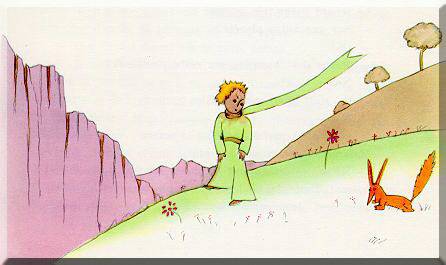
Le Petit Prince  by Antoine de Saint-Exupery  “Here is my secret.  It is very simple.  It is only with the heart that one can see rightly; What is essential is invisible to the eye…  It’s the time that you spent on your rose that makes your rose so important. . . . People have forgotten this truth,” the fox said, “But you mustn’t forget it. “You become responsible for what you’ve tamed.”

“You’re responsible for your rose. . . .”You risk tears if you let yourself be tamed.  But if you tame me, then we shall need each other. To me, you will be unique in all the world. To you, I shall be unique in all the world…” “If you tame me, it will be as if the sun came to shine on my life.”

Like a number of well written children’s books and fairy tales, this book offers supreme guidance on a major developmental task of life.  Faith and trust are the paramount components of loving.  Risking self and loss is required in love.

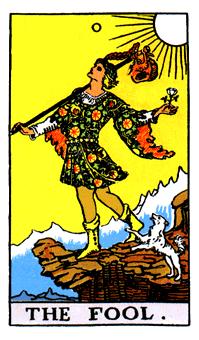
There are a lot of books that talk about how to calculate the risk and reduce the percentage of loss but as long as intimacy and self are involved in order to truly love and be seen one must step off the cliff like the fool card in the Tarot, Trusting one’s mindful heart.

Mindfulness is the key to reducing the risk while keeping the intimate connection – mindfulness and present moment focus.  These help to surround the risk with compassion, integrity, and character.

I hope you have a fantastic adventure in loving.

See you tomorrow.

Beth


Leave a comment

Lost and Found, The way

Hello

I remember when I began my search for self and the meaning of life in college.  I was intent on getting there fast.  I had a lot of ideas and a lot of energy.  I thought I could figure it all out pretty quickly and then just move on to being a great success.  Very puer, or rather the feminine puella, very dynamic, enchanting, and vulnerable; nothing could stop me.  I had a lot of success and innovative ideas that kept propelling me forward.

Then life happened, as it is known to do.  I got a little lost, and then I got a little found, then lost, then found, then lost… you get the idea.

I am pretty sure this describes most people walking around who have put energy into understanding the meaning of life and themselves.  The energy of existential angst and enlightenment can be so invigorating and frustrating.

Many of the therapeutic theories incorporate this winding, spiraling path inward and then outward through knowledge and confusion and integration of ones experiences.  The thing that is so useful about mindfulness is that it embraces the whole of things and accepts the dynamic quality of perspective such that being found and lost is, by its nature, transitory.

Very useful because it helps us from getting stuck in time and space, not caught in the past or the future, by placing us in the center of our life the present where actual change or action can take place.

Getting stuck happens when you define you have reached the pinnacle and now there is nowhere else to go; that kind of definition sets up a situation where one gets derailed off course.  The idea that something  is it, the answer, and now it must be repeated or held in place sets up a negative process where the energy degrades.  Holding something in place denies the ultimate truth of growth and change.  It creates a pull from the inside that pulls apart the thing held in place.  The cycle of life is change – it moves, shifts, grows, continues with the cycle or spiral in and then out and then in again, up and then down and then up again, onward and through.

Each answer is an ending but it is also a beginning and so is in the center of ongoing, dynamic, movement.  If you try to hold it still then the movement works against you and breaks it apart.

You can see this in relationship, your understanding of information, and existence.  The more you know, the more you see, the more there is to know.  It is ever-expansive incorporating and shifting.  The same is true for relationship – trying to hold someone to a way of being that defines them at one age disallows growth and change – yes their basic nature remains the same but what is attended to or experienced, how it is expressed, changes over time as humans are dynamic beings.

This brings me back to The Way, The Tao.  A larger more wholistic understanding of All that is,  is, and it is inside and around, and it is simple not complex.  Complexity is a trick that pulls you out of mindfulness.

Being mindful is a simple process.  Sit, breath open, allow, observe, accept, incorporate, shift.

Thus, the journey of being lost and found I suppose.

Quite a lovely journey if you are willing to lightly respond to each experience with a joyous interest – like the fool card in the Tarot.

Interest but not attachment.  Mindful, open, observation without good/bad judgement or interpretation.  Interest that sounds like this – hmm, I wonder where this will take me – perhaps down the rabbit hole to find  your way out by going within.

If you find yourself lost, fear not, a turn is soon coming that will set you again toward being found.  If you are found, take heed that holding too strongly to that knowing, may actually impede further movement until you are again lost.

Attachment is the thing to avoid or release.

Love, desire, interest, curiosity and mindfulness, these are all lovely and full of what brings you through the energy of The Way.

Lost or found you are on your path.  Follow your heart, and use your mindfulness, and joy will bring you home.

See you tomorrow.

Beth


2 Comments

En-joy now

Hello

Think of two defining moments in your life.

What is the basic emotion underlying each?

Things that stop us in our tracks and teach in this definitive way are either stern and painful or joyous.  Both are teachers but what they each teach shifts a person’s focus down different paths, one more limiting and one more expansive.

I encourage you to practice learning through joy.

When you feel joy your heart opens.  It is naturally expansive.  Joy unlocks your heart and guides you through your feelings to create more joy.

Singing can do this, especially if you are singing songs that bring you into a state of joy.  There is a softening, a slight sweetening of the experience.  It allows you to move into a neutral place or even to increase a fondness toward another or an event or a situation.

Mindful meditation has the same result.

Our emotions and senses are our guidance system.  They are navigators of our life experience.  We want to move away from negative feelings and move toward joyous ones.  This is an excellent guidance mechanism, however sometimes in youth or under defining circumstances this can result in a misinterpretation that creates a habit reaction pattern.

If you have a defining moment that sets into place a should or should not it creates a trigger that says if this, then that – so that a habit reaction is developed.  The habit reaction cannot be shifted without a re-set of the should or should not equation, if this, then that.

A trick to re-set it is to get into neutral or to get into joy. This is a trick because it is a way of getting under the habit reaction pattern to tip it on its head.

Think about driving your car.  You put it into Reverse to back up and into Drive to go forward.  In the middle is a gear called Neutral.  In neutral you cannot go forward or backward.  Getting into neutral allows for the space to decide which way you need/want to go.  It gives you space to evaluate the situation and then choose how to respond rather than just following the set pattern of one gear or another.

Mindfulness, just being with the situation, not allowing the should or should not equation to take hold, is very useful in releasing habit reaction patterns.  Mindfulness can allow for an acceptance and an observation of the situation and your emotions without a reaction to them – just taking note.  This allows for the space to decide, to allow, the next step to take place.

Mindfulness has a neutral intent to it, but it seems to open ones heart in a way that is similar to joy because it expands ones inner awareness and sense of connection.

Practicing mindful meditation increases your capacity for joy and shifts the energy of a situation as you practice paradigm shifting.  This disallows habit reaction pattern formation and dissolves habit reactions already in place.  It is a lovely practice to allow experiences to be joyous.

Learning through joy has this expansive quality such that growth is perceived as easy and enlightening.

This is most difficult to practice when the situation is loss, sadness, disappointing, fearful, or angry.  Practicing mindful meditation allows for space so that all aspects of the situation can be observed and evaluated and set in time in such a way that a positive joyous energy can be ascertained.  It incorporates a cycle of life and time that reinforces  a knowing that just as things desired are lost new opportunities are found.

This is acceptance of the way.  It centers you in your life.  Things past, the present, and things future.  As you move through your life each experience is centered in your life such that it is not an ending but in a cycle and continuing along a path.

Defining moments feel like endings, and may be completions but they are also beginnings into the next cycle, or centers of whole experiences.  When you choose to learn through mindful meditation and joy you can center yourself into the right perspective so that you can see the whole of the defining experience and its true place in your inner landscape.

Choosing to learn through joy allows for your heart to lead and guide you – not the heart meaning human love of another, but rather the compassionate, lovingkindness heart of your spirit.

Mindfulness meditation is a heart centered action.  It incorporates mind and spirit together.

Practice learning through joy.  Apply mindful meditation to your defining experiences.

En-joy now.

See you tomorrow.

Beth


Leave a comment

Thinking, Feeling, Being

Hello

What is instinctive is a natural state of understanding ones sensory guidance system information.  Your sensory guidance system is your 5 (+1) senses. Seeing, hearing, feeling, tasting and smelling are the 5 and the +1 is intuition.

Learned behavior is often not instinctive although it may be referred to as such or as a reaction.  This type of behavior takes us away from our center, by not allowing a direct connection to our sensory guidance system.

Sometimes one learns to deny what is instinctive due to circumstances and belief systems.  This is learned behavior that moves one away from his sensory guidance system.

To return to an instinctive way of being in the world one must understand his inner working belief systems and then shift away from those that are inaccurate or unhelpful.

It requires a natural and responsive relationship with ones sensory guidance system and ones inner landscape .  It’s thinking and feeling plus knowing that results in being.

The first step in developing this relationship has to do with trusting oneself and knowing oneself.  A knowing is something that is informed by your sensory guidance system and your intuition.  It is something more than book knowledge it has a connection to spirit.  In example, people who believe in god, do so through a knowing; they have a set of facts or information that give them a theory of a higher power and then they have an intuitive or spiritual or faithful experience they refer to as a knowing.  It is thinking plus feeling and intuition that results in a sense of knowing.

Think of what you know.  It is more than something you have read in a book and learned, it also has a component of reality through your own experience or inner feeling.  I know I love someone not just by my thoughts and mind but also my heart.  Careers are this way too – people know they are meant to do something by a connection to their sensory guidance information, book knowledge and something intangible that connects it to them – a knowing.

This is something that is important to develop early in life so that individuals can find where they are meant to be – whom they love and what they want to spend their life doing.  When I work with people who are unhappy or unsure of their choices, often it is a result of them having chosen career paths or life-paths to please someone outside of him/herself rather than from their own interior knowing.

Developing a knowing once you have disregarded it for a long time takes patience, understanding, compassion, listening, and development of attention to ones senses.  It is a process of opening or re-opening a portal to ones sensory guidance system.

One needs to increase ones awareness, perceptions, and connections to the environment around himself as well as the inner landscape of his being.  It requires a slowing down and evaluation of things that are accepted as truth but not really known.

This requires patience because it seems tedious to re-view aspects of our belief systems that seem obvious and true.  It’s an interpretation process.  Re-viewing what something means instinctively rather than interpreting different circumstances with the same reaction.

Integrating the knowing and the learning is a process of interpretation of paradigm and paradigm shifting as well as listening to our sense(s) of things.  We are spirit-human beings which is to say we have direct access to both the physical and the spiritual or intuitive.  If we choose to access and pay attention to both then we are being instinctive.

Breathing is a way of accessing and clearing out energy.  Meditation, both moving and sitting still, and yoga incorporate a stilling internally through breathing and focusing on ones center.  This helps us to gain access to ones sensory guidance system.

There is a tendency among energy workers to make an assertion that the ego or self is negative.  This is not my experience.  We are physical, psychological, and spiritual beings.  Our work is guided by both the ego and the spirit and each need, and are informed by, the other.

Historically in psychology, the ego mediates between the needs of the super-ego and the wants of the id. The super-ego is made up of introjects of the rules (belief systems that were swallowed whole without internal interpretation or evaluation – swallowed with an i-dent of truth) laid down by ones parents and society as well as ones stern experiences.  The id is pure desire.  It is like a young child – completely narcissistic and unfeeling toward others.  The ego mediates between these aspects to make choices that move the person forward in their goals as well as center them within the needs of a community.  The ego utilizes empathy and reasonableness.

Empathy is a necessary tool in developing ones connection to ones instinctive sensory guidance system.  Empathy places us in our center and in the center of our lives and relationships.  Empathy is not sympathy.  Empathy is having the ability to understand another’s perspective from their view; it is what assists us with paradigm shifting.

Often individuals will refer to the ego as power grabbing or wanting only to have power unto itself.  This is an uninformed understanding of the ego.  The role of the super-ego or id more accurately represent this kind of action.  Fear is often related to these roles and it causes an imbalance in how information is interpreted; it leads to reaction rather than instinctive action.

It is important to reorient yourself to the tool of using the ego as mediator to negotiate the space between physicality and spirituality.  If you are in a fear promoting situation and you have to trust your gut or spirit you need access to the ego to evaluate, using both your mind and your sensory guidance system, what aspects of the situation need your attention.  This is to say that fear presents itself sometimes as something that is an emotion not based in reality and sometimes as an emotion based on sensory information.  The ego in conjunction with intuition and spirit help you evaluate which is what.

The role of the ego is to move one to neutrality and then in that space be informed through ones spirituality, cognitions, and ones sensory guidance system.

The ego has a neutral feeling to it.  The id and the super-ego both have strong emotional attachments to them.  Super-ego feeling/thinking sense is stern and negative; it serves to keep you from changing or keep you in line.   Often the super-ego is Don’t or you must.  The id feeling/thinking sense is selfish and ownership; it serves to keep one connected to ones passions and desires but has no limits or boundaries.  Often the id is Mine.

Instinctive action is allowing your knowing to chart your course.  There is a natural sense of trust and peace that goes with this.  Navigating the environment of your inner landscape and the world around you requires a solid connection to your sensory guidance system as well as intuition and knowing, 5 (+1) senses, book knowledge, and an understanding of your self.

Instinctive knowing and being is thinking plus feeling and intuition. You will find more joy and success in your life if you allow yourself to be guided by your sensory guidance system.

Being is, I am, which centers you fully in yourself as a whole. Thinking and feeling are parts of the whole and more distant in their energy.  To test this say:   I am happy.  I think happy thoughts.  I feel happy.

Which of the three statements center you and are the fullest expression of your being?

See you tomorrow.

Beth


Leave a comment

Perception is everything

Hello

In mindfulness and paradigm shifting, perception is everything.

How can you help your child develop her skills at paradigm shifting while simultaneously teaching her an inner sense of right and wrong?  It’s tricky.

I think the answer is developing the perceptual consciousness of the attitude of gratitude.

Through this way (emphasis on the tao) she can always be redirecting her attention to her center.  Focusing on that inner security and self-knowing to help her navigate through interactions, experiences, and decisions.  An attitude of gratitude brings one into the center of one’s world while focusing one’s perception on how the thing which needs attention is somehow positively sustaining.

It is the antidote to narcissism.

Narcissism leaves a person forever searching to connect to himself while seeing only his own circumstances.  It is less self-reflective and more self-focused, the kind of self-focus that is not centering or relief producing but rather painful and tortured.  It isn’t a true love of oneself – as the myth describes but rather a lack of self-love.  Narcissism disallows empathy.

Empathy is the cornerstone to truly loving and understanding oneself or another so that one is free to perceive all aspects of a situation.

The shifting between the ground and the figure in any given paradigm requires the capacity to empathize – to see from a different perspective.

Looking at this drawing do you see two faces each in profile, or a single face, with a candlestick in between or in front?  This one is very interesting to shift back and forth from one to the other.  Defining the picture requires certain assumptions, and moving back and forth is a strong paradigm shifting experience.

Healthy relationships require this capacity to perceive from various perspectives and levels.  This includes a healthy relationship with oneself and one’s needs, hopes, aspirations, limitations, and capacities.  Our heritage, historical experiences, and belief systems strongly affect how and what we see or perceive.

The inter-relationship between one’s mind, body and spirit sensations help us navigate the tricky environment of our lives.

If we are too rigid, too self focused we lose our ability to see broadly.

If we are too flighty having difficulty focusing then we lose the ability to see deeply.

Perceiving is receiving and interpreting information from one’s sensory system which includes cognitions, feelings, intuitions, and physical reactions – like the hair raising on the back of your neck.  These subtle sensations evoke perceptions within us.

When we have strongly connected sensations and reactions then we may be too rigid in how we interpret the meaning or perception of information.  So we have to be open and flexible.

There is a wonderful book available for developing one’s ability to perceive for artists and drawing, called Drawing on the Right Side of the Brain, by Betty Edwards. It offers numerous techniques for changing your perception so that you are free of those rigid constructs and therefore increases a person’s capacity to see. It uses different techniques of shifting the way in which you are presented the figure so that you focus on the empty spaces, the ground rather than the figure.

The theory is that if you see a figure and you are attached to what it looks like you can’t see it as clearly, and that skews how you draw it.  So in example a figure would be provided upside-down so that it didn’t immediately look like what it was, so that your brain focuses on the empty spaces to complete the whole, without prejudice as to How it Should look.

Funny thing about this is it applies to how we see relationships, situations, and things that carry special meaning so that we have a skewed perspective or an attachment to what something should look like, that interferes with our ability to see the whole, or keeps us rigidly focused on one perception.

Allowing yourself the gift of viewing things from various perspectives frees you up to see more clearly the whole.

So I suggest if you feel like you are stuck in some situation and can’t get out of your perspective, turn your cognitions on their head – try arguing the other person’s point of view for a minute – that will get you into the other person’s shoes enough to maybe – just maybe – shift your own perspective or  find some area where you both agree.

Or you can do what the Yogis do and stand on your head, for a new perspective, both internally and externally, of the world around you.

Perception is everything.

See you tomorrow.

Beth


2 Comments

Healing transformation, Healing crisis

Hello

Having observed the process of healing over many years I have noticed that certain paradigms of focus are most beneficial in moving through the process.

Recently, I have had a number of transformative healing experiences myself.   This has deepened my understanding of this process of healing.

There is a magical quality to the word healing, it imparts the idea that only peace and grace are present.  It has this overwhelming positive energy, like a  fairy godmother who easily and instantaneously transforms your circumstances.

Healing is good and does result in positive experiences.  It seems the process of healing feels less graceful or peaceful.  The process of healing incorporates loss,  pain, letting go, and sadness along the way to that peace and grace.

Sometimes this is due to the loss of something tangible and sometimes it is more esoteric.

The cathartic experience of healing transformation can bring a sense of relief and positive energy – but once you change, others need to change in relation to you and that is another form of loss, or another snag, that causes discomfort and strife rather than peace.

How you express the change may affect the gracefulness with which the other accepts the change but even the best, kindest, and most gentle clarification may result in conflict and anger on the part of others.

This is especially true when you are releasing an internal pattern of interaction that doesn’t serve you , because that pattern may feel to the other as necessary for their wellbeing, or a longstanding  hurt from some action by someone whom you love, usually an unintended hurt.  In each of these instances the other may not be accepting or supportive of your healing.

The process of healing has a ripping and conflictual aspect to it wherein long-held beliefs or perceptions are examined and then elements of these need to be let go and transformed.

The shifting paradigms don’t just relate to the person who is healing but also to all those connected to him.  This means there is a rippling effect in the transformational process.

It can affect the person in ways he is not prepared to address or handle.

The healing can have an emotional/psychological, physical, and spiritual component, or some integrated effect on all three aspects of one’s being.

It may shift the person such that basic foundational beliefs about the world and/or himself are irrevocably changed.  And then, through this it can affect the relationships of the person in the healing process.

As you go down the line of those affected, some are not prepared for the change that comes with the healing and it feels like a loss for them; their reaction may feel less than supportive and put pressure on the person who is healing to not make the transformation.  In some instances a healing may result in the loss of a relationship because the other person is not willing to accept the change and transform himself, or change how he was in relationship with the you.

This is the price of healing; it feels like you have to pay a price to have yourself.  But another perspective is that is is a gift, that ending the cost to your wellbeing results in a gift to yourself and the other.

We want to grow and transform into our best selves but we also want things to remain the same.  These two desires are not fully compatible.  I think it is best to respond to these issues from a mindful, compassionate perspective of lovingkindness.

Death, divorce, the dissolution of a business relationship all can be viewed as a healing crisis or a healing transformation.  And for different parties, especially in the latter two, it may also be the result of a healing transformation or crisis.

Whether it is identified as transformational or crisis has to do with the paradigm through which it is viewed – as either a gift or a trauma.  The former allows for movement more quickly and fully into a graceful, peaceful embrace of change.  The latter is a snag, a negative energy that creates conflict, anger, and a stuckness  or stickiness – the opposite of grace and peace.

The important qualities of focus through this are compassion, love, lovingkindness, and mindfulness, toward oneself and toward the other who has caused the hurt, trauma, change, or release.

Compassion toward oneself and the other is required as you work through the re-creation or re-configuration of the relationship, incorporating the new information, transformation, or change in relationship.

Remember that the one who at first realizes the need for change and asks for it, who first experiences the healing transformation, is further along in the transformation and feels more relief than snag.  And so, there is a delay in how the healing and transformation is received and incorporated into the new relationship experience, for each person down the line of information reception.

This is paramount for the smooth transition and grace one desires when moving through  the process of healing.

Each healing brings us closer to what we are here to do and our best selves so that how we are in the world is strong, empowered and loving.

It is counter-intuitive to perceive loss as healing, and yet it may be a gift.  One must be open to a broader view of the loss and how it is part of the whole or gestalt of who you are.  It is not a linear equation but rather a spiral of mind, body, spirit, awareness and integration.

Be open to how the process of healing is bumpy and emotional, and focus on maintaining a connection to your inner compass as well as compassion toward yourself and others through a mindful, lovingkindness paradigm.  This will provide you with an experience of grace and peace through your healing transformation process.

Peace is every step, Thich Naht Hanh.

May every one of your steps be peaceful.

See you tomorrow.

Beth


Leave a comment

Stepping off the cliff; how faith affects choice

Hello

In the Tarot, a deck of cards used for divination, based on a compilation of symbols and myth, The Major Arcana card The Fool is often pictured as a happy character about to step off a cliff without a care in the world; it’s a picture of a new beginning and the individual has all he or she needs to make the move/change.

The interpretation of this card is varied – depending on the individual and other cards in the reading – but it generally incorporates some degree of faith.  Much like the scene in Indiana Jones and the Holy Grail – where the character steps off the cliff onto a hidden/camouflaged wall to walk across to the room wherein the grail is kept.  It is the combination of passion, ambition, intellectual prowess and faith, together, that affords the conclusion that a platform is present.

It supports the idea that one will be rewarded or have success by following one’s bliss, or by taking the next step and having faith in one’s convictions.  One needs to do his work, be learned and informed as well as be faithful and flexible, incorporating the intellectual knowledge and faithfulness.

This set of actions of combining intellectual investigation and leap of faith toward a new beginning or a change in course, is the best description of The Fool card in the Tarot, and an efficient style of negotiating movement in the world.

We cannot fully know the outcome of our choices – we may be able to make a calculated guess about the result – but the outcome may be affected by the dynamic aspect of the world and other factors unknown to us.  Therefore, major decisions are both intellectual and faithful.

Whether to marry, have children, go into a specific career or change careers these important decisions require a combination of intellectual investigation and faith.

If we do not incorporate a certain degree of faith into our decision-making process then we may be limited in our choices, and actions, to things provable (and many of the above kind of decisions are unprovable).  Thereby missing out on opportunities (not taking a step) or (taking a mis-step) by not paying attention to some intuitive element of the decision that would have said don’t do it.

Faith is equally as important as our intellectual investigation and intuition in decision-making.  The actions of (1)/  being too willing to ignore cues that there either may (a)/  be a problem or (b)/  direct you on a course,  as well as (2)/  not being willing to act, due to the fear of looking foolish, all can interfere with mindful decision-making.

Paying attention to intuition means to stop, look, listen/feel as you are processing information in decision-making to determine if something is off. It helps to focus in on our assumptions and see if we are connecting dots that should be separated.

This is especially true when we have a specific picture we are trying to create.  If we push too hard to get that picture we may miss the real BIG picture of the outcome.  There is a pressure to skip those funny feelings of concerns or to let fear run the decision-making process.

Too much push or pull and we are exchanging faith for attachment, which can be damaging because it shifts the energy away from flexibly and dynamically creating.  The concept of attachment here is having too rigid of a picture of the outcome.  That makes the process too rigid and inflexible, no room for intuition.

However, if we don’t allow ourselves to be pulled a bit by our intuition or sense of what we are trying to create (faith) then we may miss a great opportunity.

A balanced, mindful, flexible approach to listening to intuitive information, and an open-minded approach to mindful investigation, is the best process.  Keeping the energy of the fool card happily stepping off the cliff, is trusting faith and yourself.

Pay attention to your inner sense about something while you are developing a plan about what you want to do, or how you want to make a change.  Then, while allowing for rapid changeability to address the dynamic process of the fabric of life, you can remain in-step with the fabric of your life so you may evolve, and create what you want.

Be free and easy with an inner compass of conviction and you will find that decision-making will feel less risky and more joyful.  That inner compass can keep you on track, so you don’t lose yourself, and the free and easy part can allow for flexibility, so you may find an even better way in your life.

It’s like a combination of the Tree Pose in Yoga and The Fool card in the Tarot.  The first is a way of centering and the second is a way of moving.

See you tomorrow.

Beth


Leave a comment

Transcendence and Transcendent shifting

Hello

My dear friend, Lisa Aldon, has developed a theory of leadership called transcendent leadership.  She thinks of it as the evolution of consciousness.

When we talk with each other I always call it transcendental leadership which makes her laugh.

When you think of transcendence, transcendent and transcendental they are similar in nature, in fact it’s a little difficult to tell them apart.  They are elaborate terms that describe a way of being that incorporates mindfulness, paradigm shifting, compassion and lovingkindness.

To transcend is to exceed, excel, surpass or go beyond.

Transcendence is mastery, or a state of existence beyond the limits of material experience.

Transcendent can be defined as surpassing or exceeding usual limits especially in excellence, or being beyond the ordinary range of human experience.

Immanuel Kant’s transcendental idealism is a system of philosophy emphasizing the spiritual and intuitive above the empirical and material.

Transcendental can also be defined as otherworldly beyond human experience.

All of these terms incorporate a concept of excelling in nature as well as a component of spirituality.

I think of this as an offshoot of mindfulness or mindful behavior, because mindfulness-in-action incorporates information outside the norm and integrates compassion, excellence in evaluation, and integration of the sensory information of mind, (body), and spirit.

Transcendent shifting is quantum in nature.  It’s like paradigm shifting on steroids.  It incorporates a gestalt of an experience and then moves the person to a new perspective.

Transcendence allows for, or is in response to, a release, a letting go or a shifting in what matters as an internal paradigm, that shifts the entire axis upon which a being sits, or the vision of the future. After which, a person feels completely and wholly renewed and rejuvenated, almost re-born into a new world.

Transcendence generally feels more like surrender than dominance.

The transcendental component – the spiritual and the intuitive – creates the space for transcendence.

Depending on the focus of the work, each day offers opportunities to create transcendent shifting and transcendence.

These elaborate words are actually descriptive of mundane everyday interactions when one is focused on mindfulness and paradigm shifting in interaction.

In human interactions  this may look like an opportunity to let the fight go by while going under the conflict to the threads of connection, (an action of surrendering that doesn’t mean giving in).  This is the action seeking understanding.

This is a spiritual paradigm rather than a singly focused ego action of being right.

Think of your relationships with those you love.   The paradigm to connect and know the other is greater than the need to prove you are right (or at least from a spiritual, mindful, broad-based perspective it is more harmonizing).

If you want to know your child and be a helpful person to her than understanding her perspective of a drama is more useful than telling her the right thing to do without hearing her conflict; or telling her it doesn’t matter.  This is true even if her conflict is with you.  She must feel the connection to you deeply and fully in order to trust you.  Furthermore,  in order for her to trust you, you must be trustworthy.  Trustworthiness is a function of being congruent and seeing/understanding/knowing her.  You cannot see her if you do not understand her perspective.

Understanding is  a transcendent action.  It requires the suspension of pushing toward one’s own beliefs and thinkings while attempting to make a connection to the other’s.  It is a gathering of information and increase in clarity that may result in an internal shifting and integration of the information so that the place(s) where the two paradigms are similar can be revealed or a new position can be attained.

This is mindfulness-in-action.  Perhaps, it is an evolution in consciousness.  What an interesting concept.

Think of these terms as you go through your day.  See if you can be them in your loving interactions and relationships.  You may find the world anew, and create your own transcendent leadership program in your own home and workplace.

See you tomorrow.

Beth


Leave a comment

Inside-Out Change

Hello

Paradigm-shifting can occur in an instant; one can see the shift instantaneously.  Shifting an inner paradigm of how you are in the world takes a longer time and seems to be more incremental.

Being different is more challenging than seeing the shift.

Using a picture to show a paradigm shift can exemplify the first process.

Above is a figure/ground image that is marked in shadow and light.

The figure in the foreground is of a man playing the saxophone or smoking a large pipe; the image in the background is of a women’s face, the shadow defining her features, hair, and neck.  Seeing both is a shifting between the figure and ground or two paradigms – once you are able to do this you instantaneously experience the paradigm shift.

When you internally experience a paradigm shift you can at times feel it instantaneously like the story told by Steven Covey in The Seven Habits of Highly Effective People, about a young man and his children on a train.  The children are acting-out and an observer is annoyed by this.  Then the observer discovers that the father is emotionally flat and not stopping the children from their effusive behavior because he wants them to have the opportunity to be like children as they had just left the funeral home and burying their mother, his wife.  The observer upon hearing this has an internal paradigm shift from thinking the father is a bad father for not controlling his children to having empathy for the children, and the father, for their loss and seeing what a positive choice the father has made to not squash their behavior.

That shift occurs immediately but having a truly changed internal paradigm shift, and acting, perceiving and interacting in a more compassionate way, is a longer process that develops over-time in response to the immediate internal paradigm shift.

Covey refers to this as an inside-out process.

I perceive true or real and sustaining, therapeutic change as an inside-out process.

It is a function of being self-aware, knowing oneself and acting congruently with one’s internal perceptions, knowings, beliefs, and motivations.

This is self-awareness and personal responsibility in actions and interactions.   Versus a lack of self-awareness and a style of blame or seeing the responsibility outside oneself.

I talk about this as Being the Change.

Covey talks about this as changing Have to Be.

If you want to have trust then be trustworthy … or if you want to have a happy marriage then be the kind of person who generates positive energy and sidesteps negative energy rather than empowering it (empowering the negative energy by focusing on and giving energy to it).

Being mindful in your evaluations and actions, and applying compassion and lovingkindness, will bring you to this process easily and thoroughly.  By thoroughly I mean deeply; it will be meaningful and feel real, solid, and strengthening.

One of the primary ways to address this inside-out process is to change a sense of internal insecurity to a focus on developing a sense of  internal confidence.

Insecurity engenders negativity and critical evaluation that excludes compassion.

Confidence engenders positivity, harmony, and critical evaluation that embraces compassion.

The first is disconnecting and the second is connecting or re-connecting.

Changing one’s internal paradigm for interaction from disconnecting (protecting of self, defensiveness) to connecting (knowing one’s self, and focusing on harmony, compassion, and love) is a characterological paradigm shift that will allow one to be, and view interactions from an inside-out perspective.

It’s the paradigm of being connected rather than being right.  Arguing to be seen as right and the other wrong often creates adversity rather than connection.

When, in interaction, the internal paradigm is to be connected or sincere harmony – then one is drawn to seek first to understand as Covey describes it, and look for the connecting threads rather than looking for the places where one disconnects.

Successful and effective mediation and negotiation are based on this internal paradigm.

It is a function of mindfulness, and a willingness to be balanced in one’s evaluations and interactions.  Incorporating not just one’s personal view of the situation but being willing to understand another’s perspective of the situation and incorporate the elements of both.

This style of interaction, this internal paradigmatic-based behavior, allows for connection and harmony.

Self-awareness, flexibility, mindfulness;

Confidence, and a lack of insecurity or need to be right;

As well as Congruence in actions and internal paradigms;

These all together determine inside-out change.

Be the Change you wish to see in your world; when you are being it you will see it in all your interactions and relationships.

See you tomorrow.

Beth